
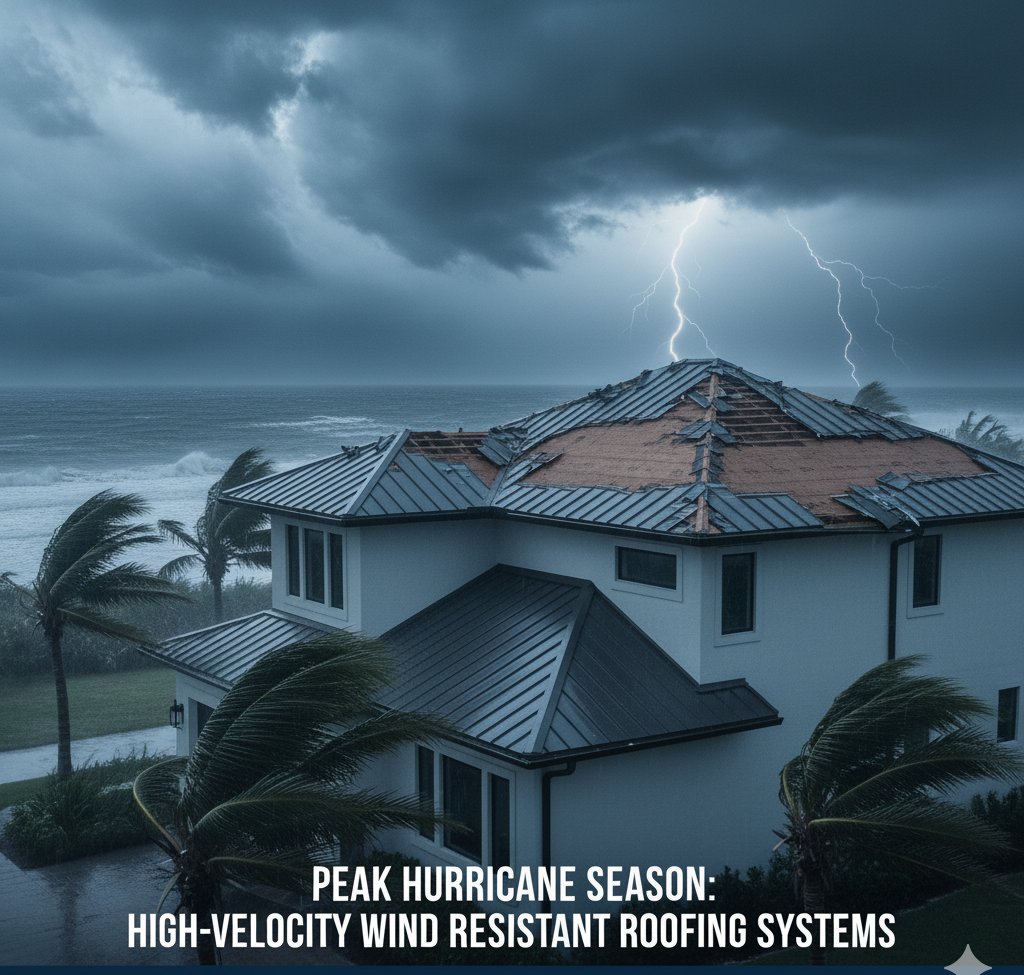
Peak Hurricane Season: High-Velocity Wind-Resistant Roofing Systems
August marks the peak of hurricane season in Florida, bringing with it the highest risk of severe weather. During this critical period, homeowners must ensure their roofs can withstand Category 4 and 5 hurricanes with wind speeds exceeding 150 mph. Understanding high-velocity wind-resistant roofing systems is essential for protecting your most valuable asset.
Understanding Hurricane Wind Forces
Hurricane winds create two primary forces that threaten roofs:
Wind Uplift: As wind flows over your roof, it creates a pressure difference that literally tries to lift the roof off your home. This is the most common cause of roof failure during hurricanes.
Wind-Driven Debris: Flying objects become dangerous projectiles that can penetrate roofing materials, creating openings that allow water to enter and cause catastrophic damage.
Wind Rating Systems Explained
Understanding roofing wind ratings is crucial:
ASTM D3161: Basic wind resistance test (up to 60 mph) - insufficient for Florida coastal areas
ASTM D7158: High wind resistance test (up to 150 mph) - recommended for most Florida homes
Miami-Dade County Approved: The strictest standard in the nation, tested for 180+ mph winds
For Florida homes, especially in coastal zones, roofing systems rated for 150+ mph winds are essential.
High-Velocity Wind-Resistant Materials
Metal Roofing: When properly installed with concealed fasteners, metal roofs excel in high-wind conditions. Standing seam metal roofs can withstand winds up to 180 mph when installed according to manufacturer specifications.
Impact-Resistant Shingles: Class 4 rated shingles, combined with enhanced fastening systems, can resist winds up to 150 mph. Key features include:
- Denser material composition
- Reinforced edges and corners
- Multiple attachment points
- Adhesive strips for wind resistance
Tile Roofing: Properly installed tile roofs with appropriate fastening systems can withstand high winds. However, they're vulnerable to impact damage from debris.
Installation Techniques for Wind Resistance
Proper installation is just as important as material selection:
Enhanced Fastening: High-wind installations require:
- Additional fasteners at roof edges and corners
- Closer fastener spacing (typically 6 inches instead of 12)
- Special attention to roof valleys and ridges
- Proper flashing installation
Edge Protection: Roof edges are most vulnerable to wind uplift. Proper edge metal installation and enhanced fastening are critical.
Deck Preparation: The roof deck must be structurally sound. Weak or damaged decking cannot support a wind-resistant roof system.
Insurance Benefits
Installing wind-resistant roofing provides significant insurance benefits:
Premium Discounts: Many insurance companies offer discounts of 15-30% for homes with wind-resistant roofing systems. These savings accumulate over time, helping offset installation costs.
Faster Claims Processing: Homes with properly installed, certified wind-resistant roofs often experience faster insurance claim processing after storms.
Lower Deductibles: Some policies offer reduced hurricane deductibles for homes meeting specific wind-resistance standards.
What to Look for in a Wind-Resistant Roof
When selecting a wind-resistant roofing system, verify:
- Certification to ASTM D7158 or Miami-Dade County standards
- Wind rating of 150+ mph for coastal areas
- Proper installation by certified contractors
- Manufacturer warranties covering wind damage
- Compliance with local building codes
Maintenance for Wind Resistance
Regular maintenance ensures your roof maintains its wind resistance:
- Inspect and repair loose or damaged shingles immediately
- Check and reinforce roof edges and corners
- Ensure flashing remains secure
- Trim tree branches that could become projectiles
- Keep gutters clean to prevent water backup
Working with Crown Design Builders
At Crown Design Builders, we specialize in high-velocity wind-resistant roofing systems. Our team:
- Assesses your home's specific wind exposure
- Recommends appropriate wind-resistant materials
- Installs using certified techniques for maximum wind resistance
- Ensures compliance with Florida Building Code
- Provides documentation for insurance discounts
- Offers comprehensive warranties
Conclusion
As August brings peak hurricane season, protecting your home with a high-velocity wind-resistant roof is not optional—it's essential. The right materials, proper installation, and regular maintenance create a roofing system that can withstand nature's most severe weather.
Don't wait until a storm is approaching. Contact Crown Design Builders today to assess your current roof's wind resistance and explore options for upgrading to a system that can protect your home during peak hurricane season.